When Construction Sciences transitioned its safety reporting to Kiwa Impact, the benefits quickly became clear: faster response times, reduced risks, and greater employee engagement.
Construction Sciences, operating under the Kiwa Group in Australia, adopted the Kiwa Impact reporting application for health and safety management. The system was implemented across several Kiwa countries as part of a global development initiative aimed at harmonizing and streamlining safety data management internationally.
Construction Sciences is the largest provider of construction materials testing services in Australia. The company supports the design and construction of bridges, dams, airports, mines, and railway infrastructure through services such as materials testing, geotechnical engineering, environmental consulting, and specialized testing.
Safety Manager Lucy Shaw explains that as part of the global project, the Impact system now includes standardized international forms, such as incident reports and supervisor safety inspections. In addition, local forms are used, including vehicle induction and incident reports, equipment checklists, and internal audit forms.
Sometimes, Construction Sciences’ clients want to see what safety measures have been taken at their sites. Impact makes it easy to generate client reports in PDF format. And if an incident occurs, Impact enables immediate reporting and real-time communication with clients.
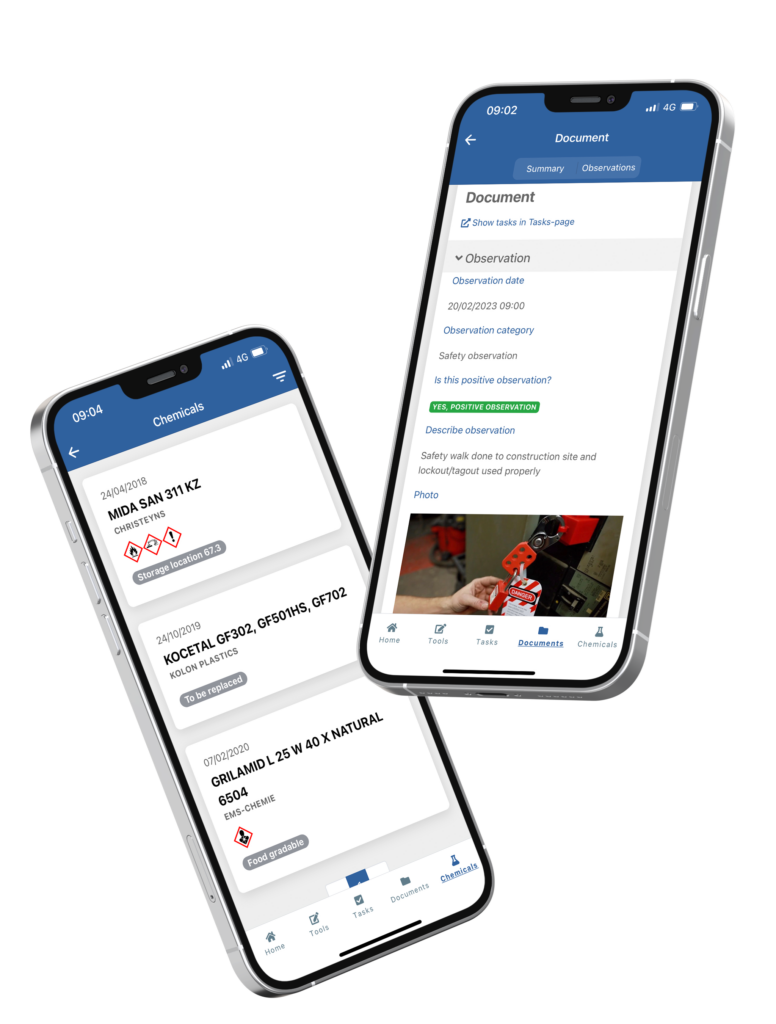
Although Impact has been in use for less than a year, Shaw says the benefits are already visible. “For example, supervisors respond to issues more quickly, and we can now ensure that actions are followed through. We believe this will help reduce risks and hazardous situations going forward,” she reflects.
Shaw also highlights the value of being able to analyze specific issues across the entire organization or country. “If a particular risk is concerning, we can focus our review on that. Since all the data is clearly presented in one place, we can quickly identify recurring risks or areas that need additional guidance,” she explains.
Construction Sciences was able to engage employees in reporting quickly, as reporting had already been part of daily operations—first on paper notebooks and later in another application. According to Shaw, a major
advantage over the previous system is that Impact makes it easier for supervisors to track and manage entries.
Impact’s flexibility also allows for highly detailed forms that adapt based on responses. “For example, depending on the type of work, we can ask more specific questions related to that task, which is really useful,” Shaw notes.
Impact’s ease of use also accelerated its adoption. Construction Sciences provided minimal training because it simply wasn’t needed. “We basically asked people to download the app and log in. They figured it out themselves because it’s so simple and intuitive,” Shaw says.
Although Impact is already widely used at Construction Sciences, Shaw says its application is continuously evolving—also beyond health and safety: “Next, we want to use it for quality management and sustainability reporting.”
Reporting has also been developed in collaboration with employees by collecting feedback on what the forms should and shouldn’t include. Based on this feedback, unnecessary questions have been removed, improving the relevance and usability of the forms. Shaw says employees are happy to use Impact because they are involved in designing the forms and understand the importance of the questions. “They feel their responses matter and that the forms aren’t just filled out for the sake of it.”
Shaw feels she has received prompt support and guidance from the Kiwa Impact team in Finland whenever needed. She especially appreciates that the team genuinely wanted to understand their background to optimize the system for their specific needs. However, Shaw believes the best thing about Impact is its simplicity, which allows most tasks to be handled independently without constant support.
Construction Sciences’ experience shows how digital tools can improve safety, streamline operations, and increase employee engagement—provided they are intuitive and truly designed to meet real needs. With Kiwa Impact, Construction Sciences’ daily operations have become not only smoother and safer but also more inclusive, ensuring that every employee’s contribution is recognized and impactful.